
Last updated September 22, 2026
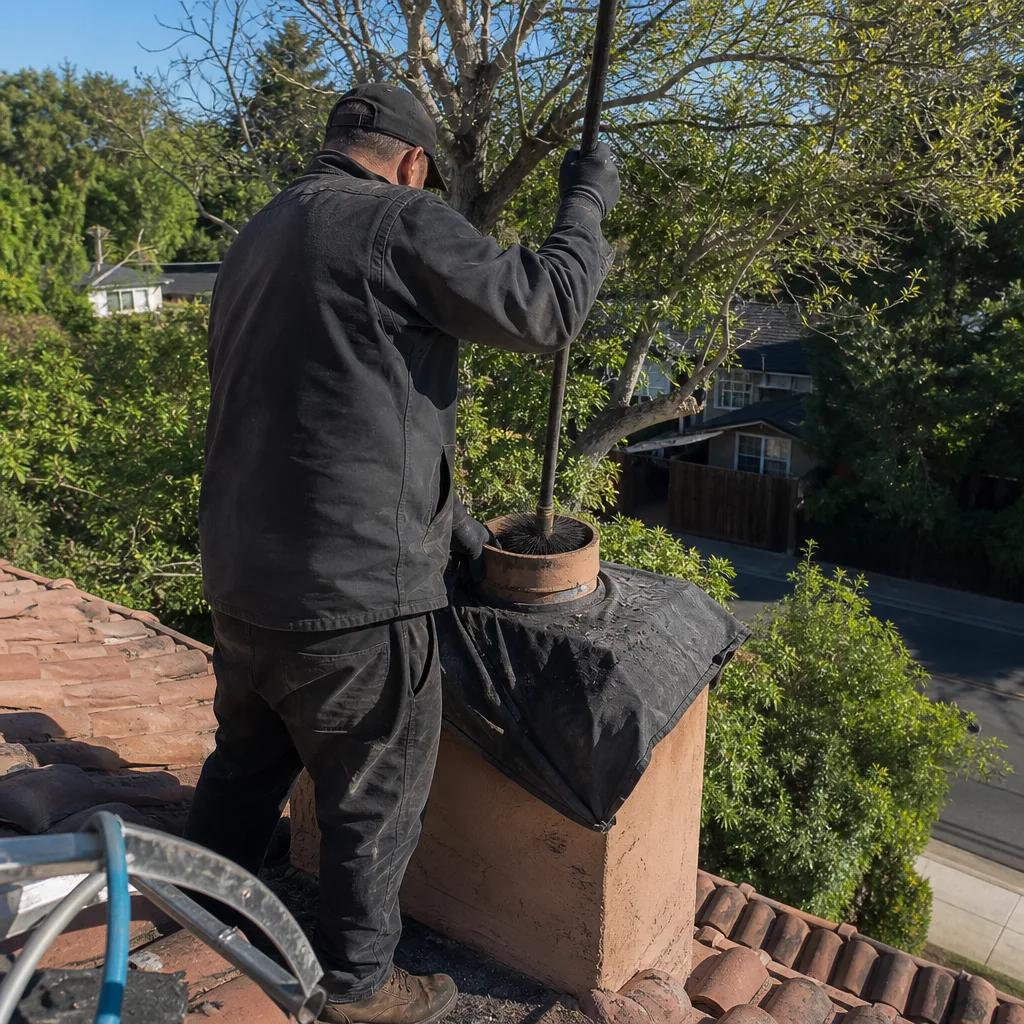
Level 1 sweep and inspection to the NFPA 211 annual standard - flue, crown, cap, and flashing checked and photographed
Chimney sweep logs do not sweep chimneys. They loosen some creosote - which then falls where a brush and vacuum still have to collect it.
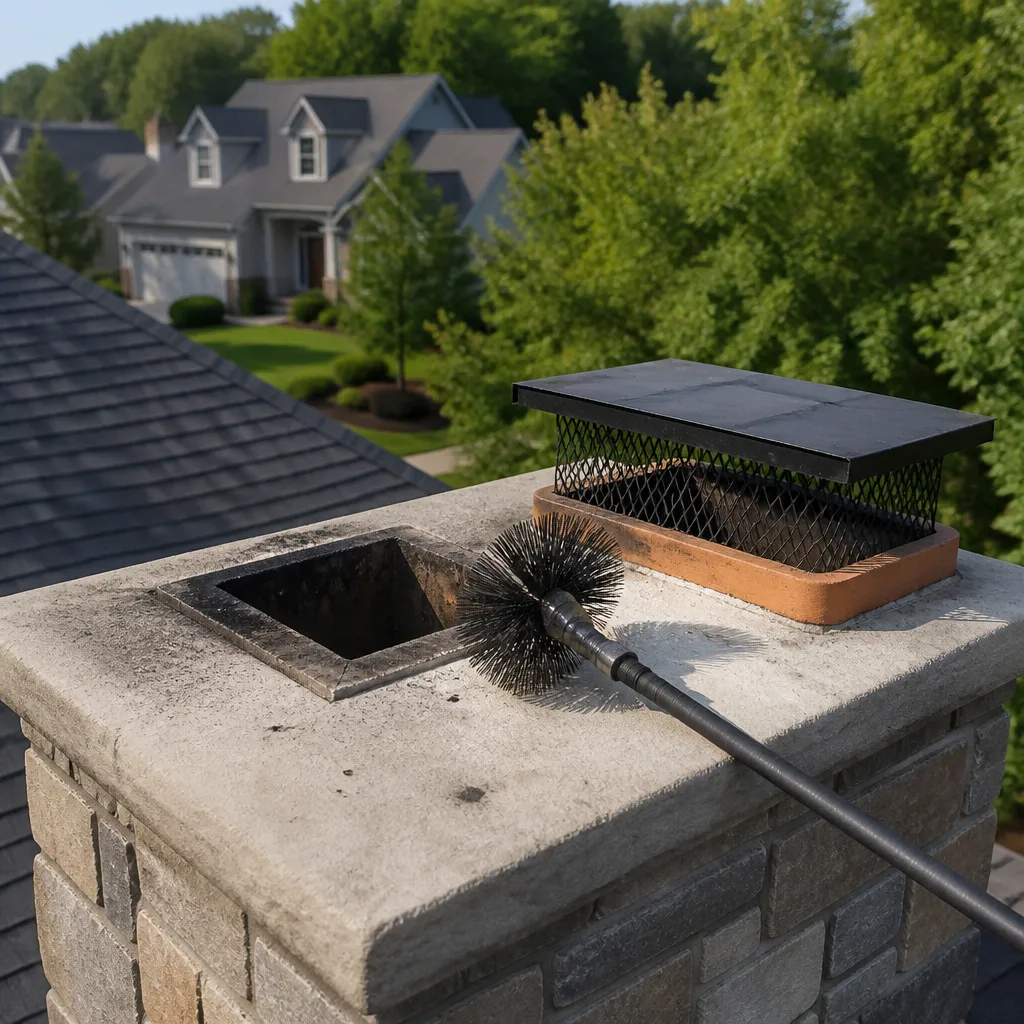
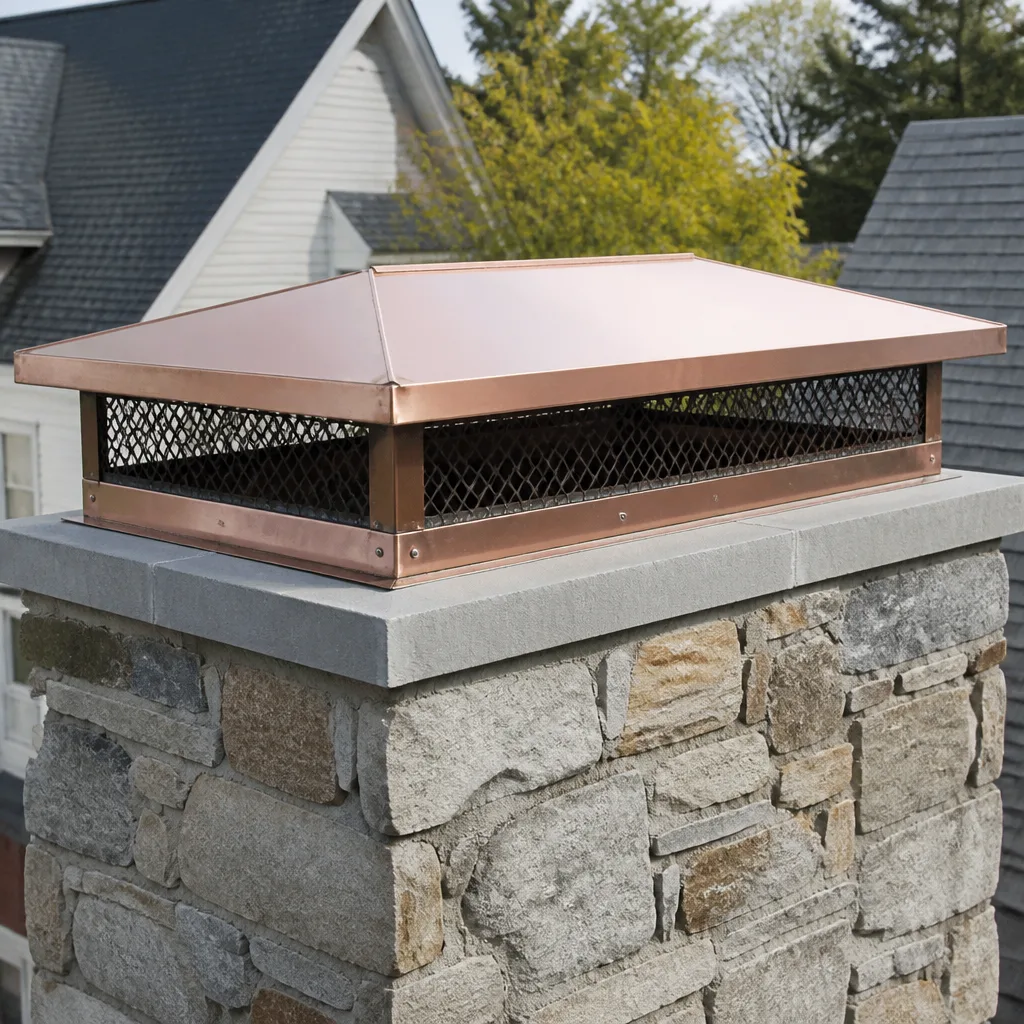
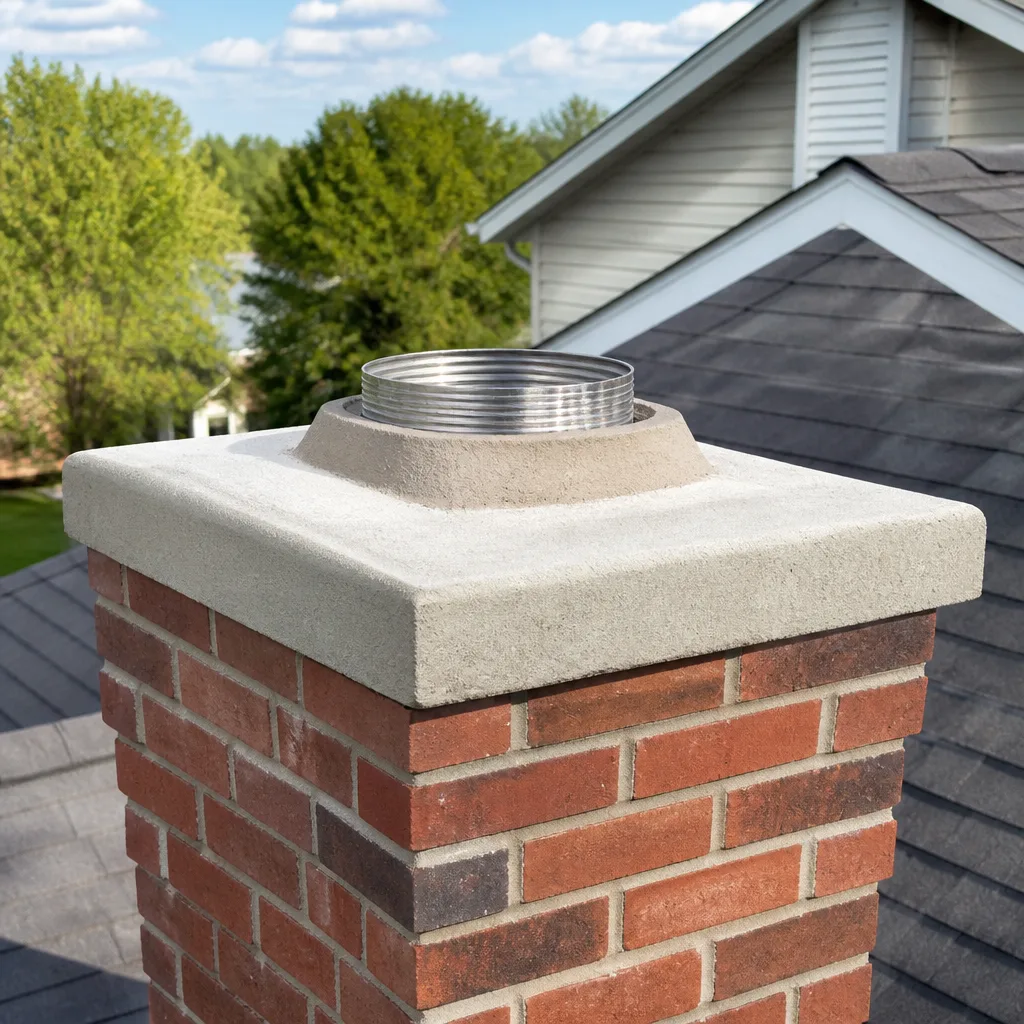
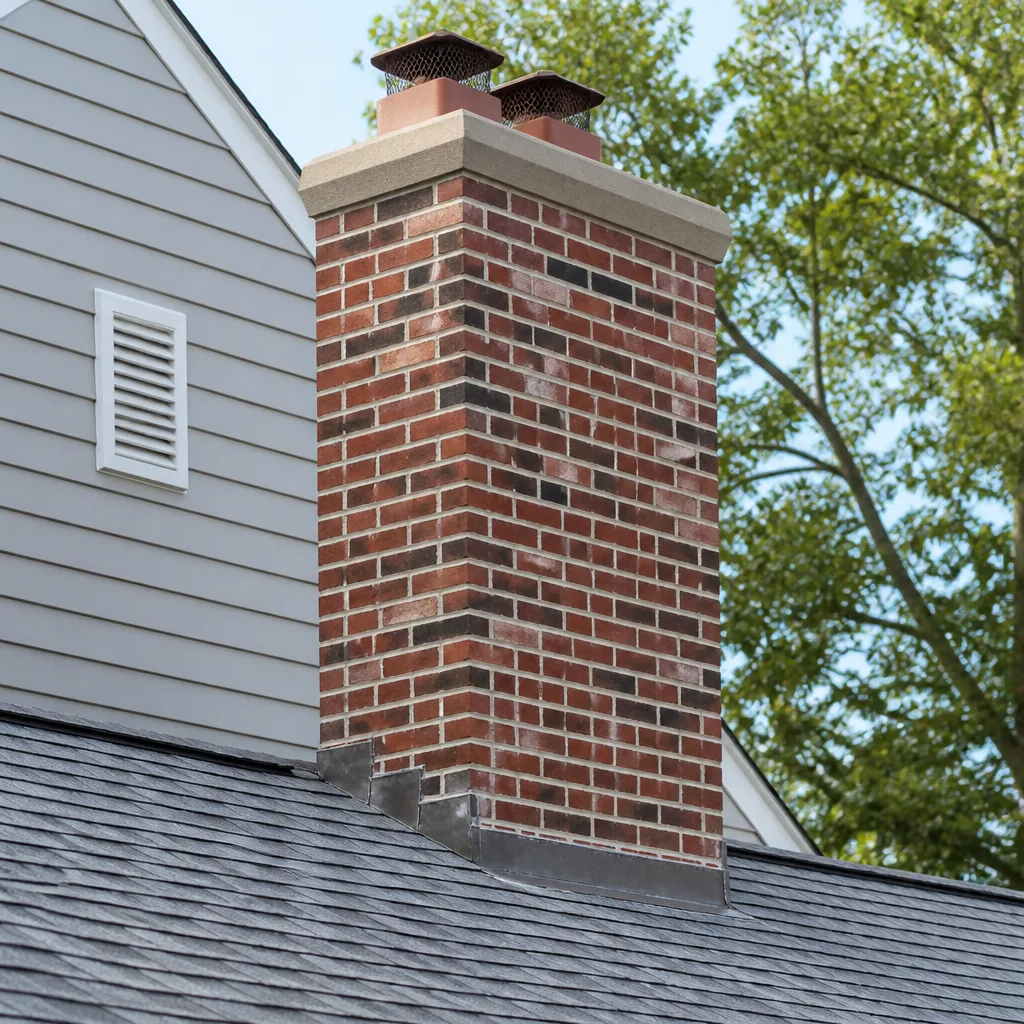
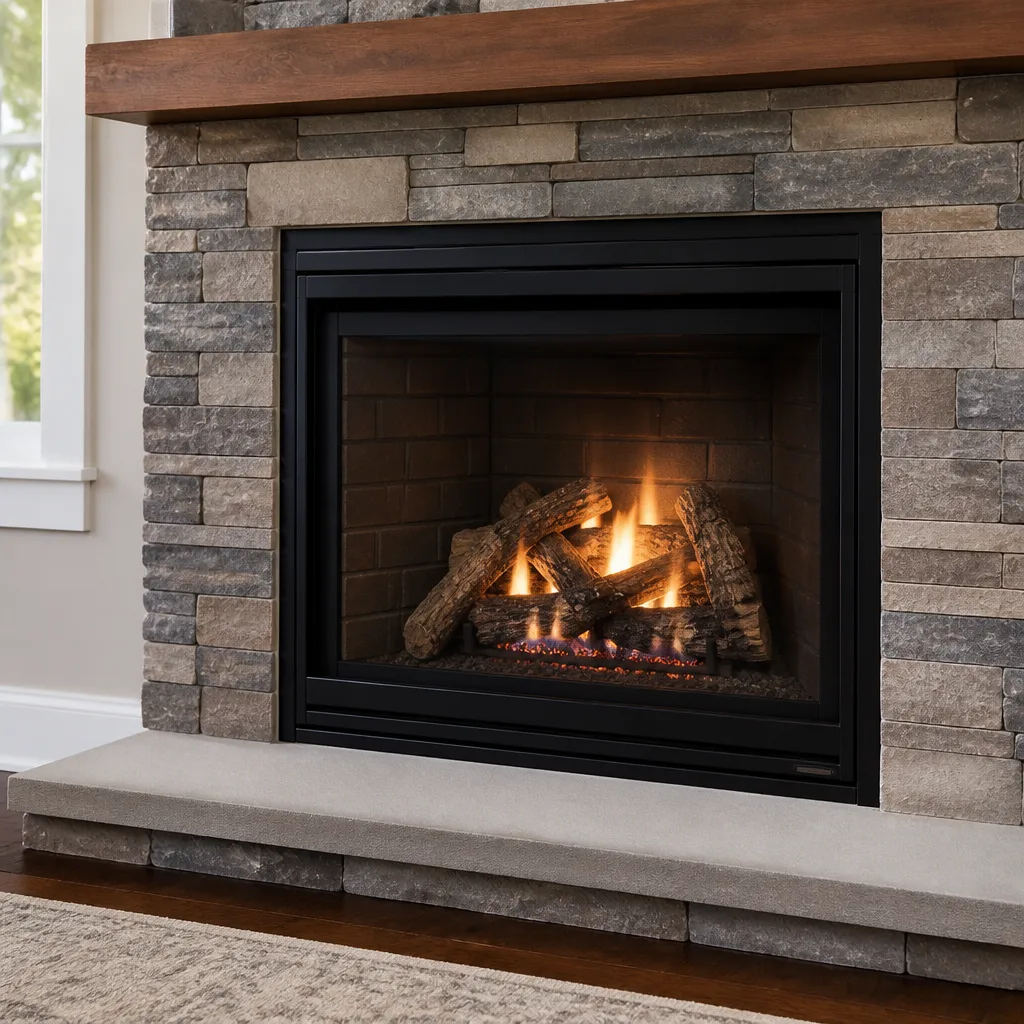
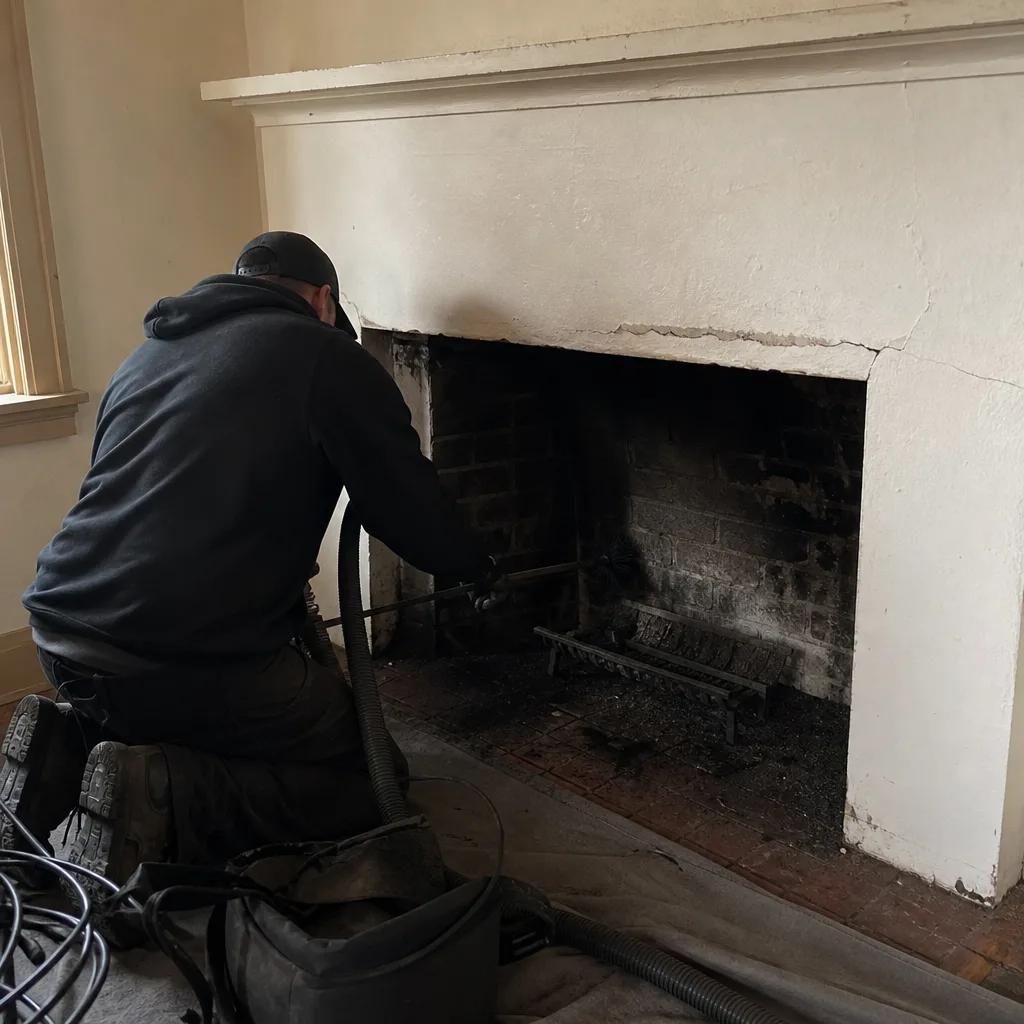 Before
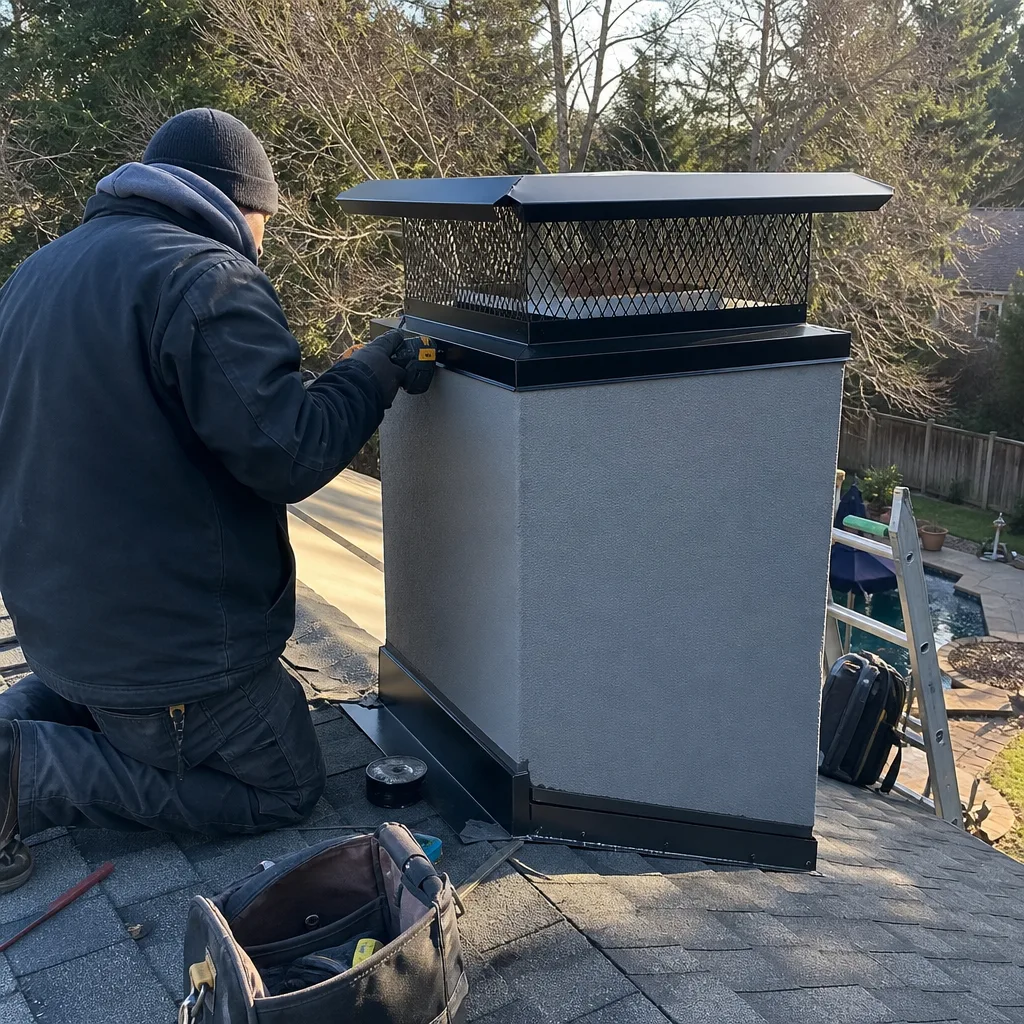 After
After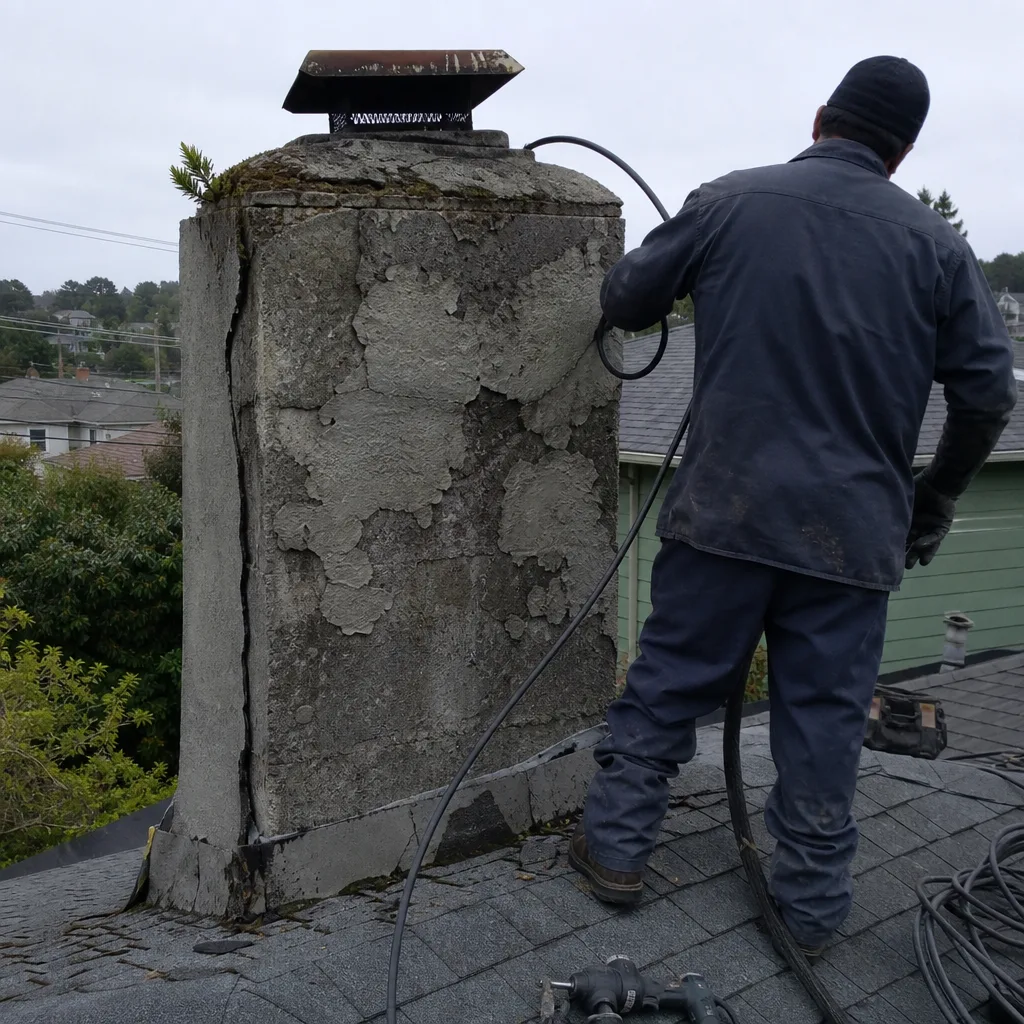 Before
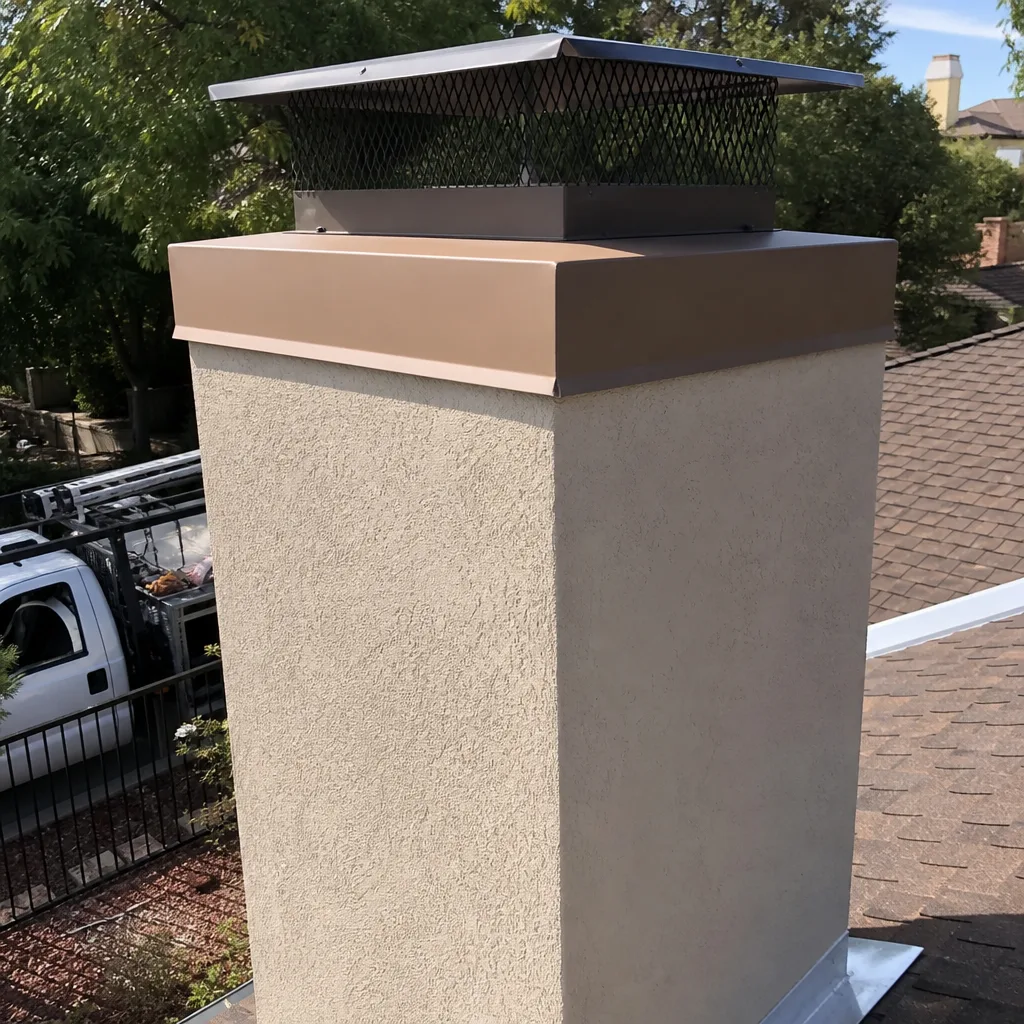 After
After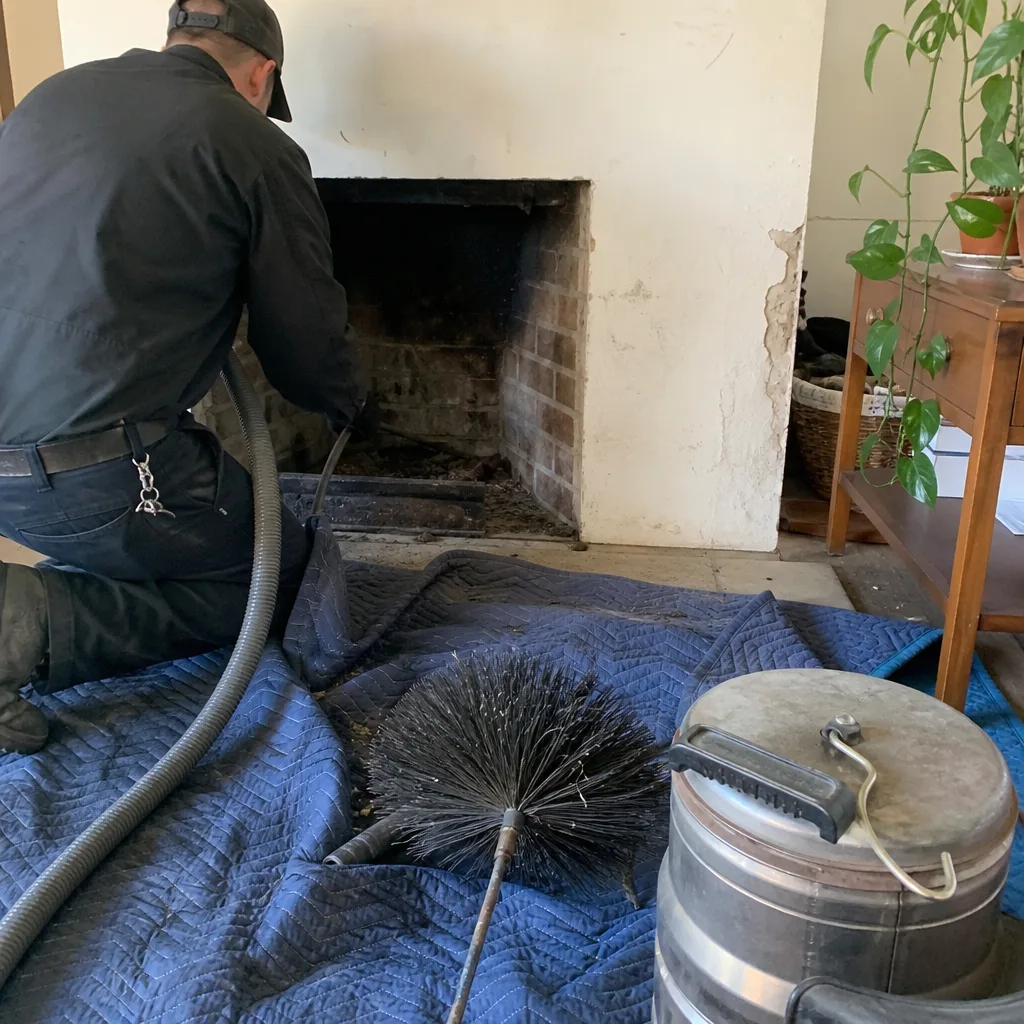 Before
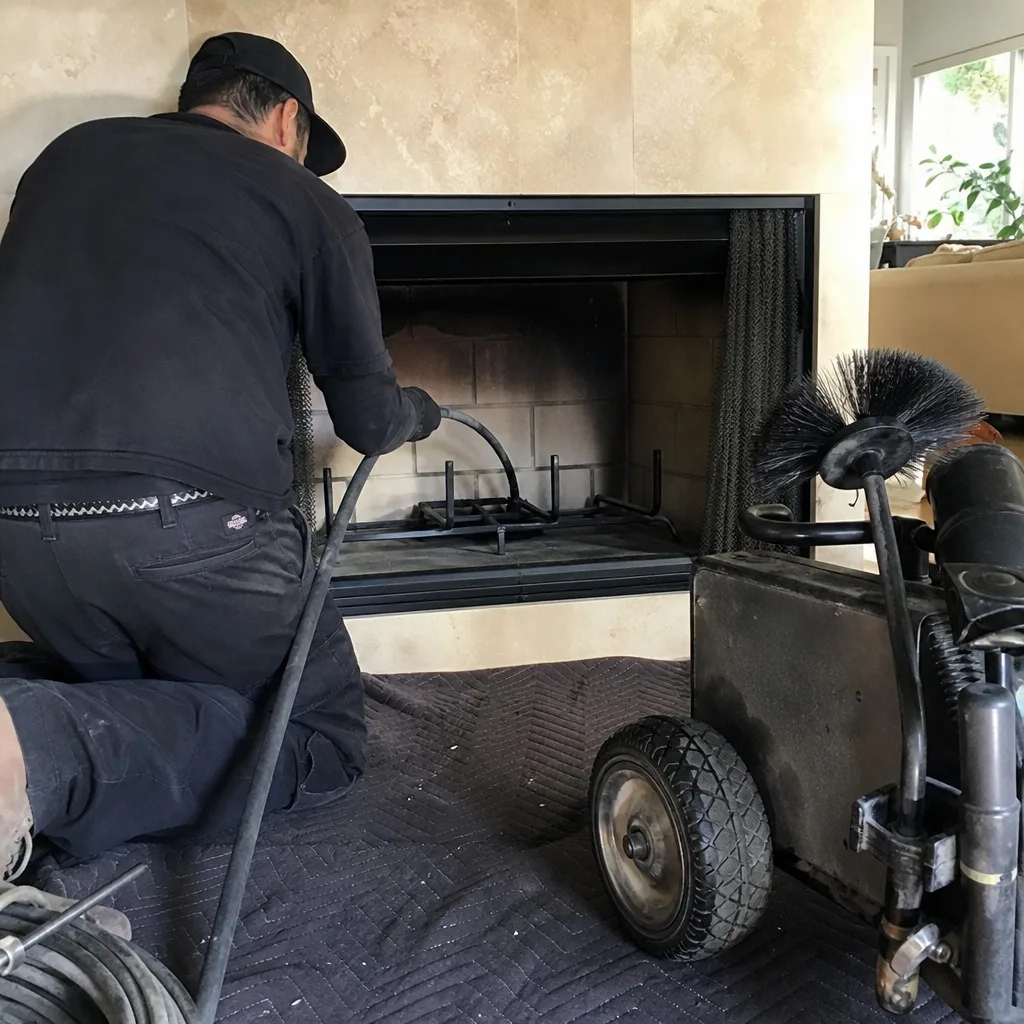 After
AfterChimney Cleaning Permits, Codes & Inspections in CA: What You Need to Know
A chimney liner replacement installed without a permit in Oakland can void a homeowner’s fire insurance policy retroactively - meaning the unpermitted work done three owners ago is still a live liability on the title today. Most homeowners assume their sweep company handles permits, or that no permit is ever needed for chimney work. Both assumptions are wrong, and both cost money. In our complete guide to chimney cleaning in Oakland, we’ll separate what’s regulated from what’s not under California law, Oakland’s local fire code addenda, and the real estate disclosure rules that can force a Level 2 inspection at closing. If you own a home in the Oakland hills or the flatlands near the estuary, the permit rules differ more than you’d expect.
Quick Answer
Chimney cleaning and sweeping do not require a permit anywhere in California. However, repairs discovered during cleaning - liner replacement, firebox rebuilds, crown work above a certain cost threshold, and structural modifications - typically do require a City of Oakland building permit. The company that cleans your flue is rarely the party that should pull those permits; most sweeps lack the C-29 or B contractor license required for structural chimney work. Documentation from an NFPA 211 Level 2 inspection satisfies insurance and real estate disclosure requirements even when no permit is involved.
Table of Contents
- California Health & Safety Code 19871: What It Actually Covers
- Oakland Fire Code Addenda and the Hills Overlay
- Which Chimney Repairs Require a City of Oakland Building Permit
- NFPA 211 Level 2 Documentation and Insurance Compliance
- Real Estate Transactions: When Level 2 Becomes Mandatory
- Cost of Permits vs. Unnecessary Permits: What Oakland Homeowners Pay
- Common Mistakes to Avoid
- When to Call a Professional
- Frequently Asked Questions
 Before
 After
AfterCalifornia Health & Safety Code 19871: What It Actually Covers
California Health & Safety Code 19871 requires that chimneys, fireplaces, and vents be “maintained in a safe condition.” That’s the entire statutory text that sweep companies wave around when they claim state law mandates annual cleaning. It doesn’t. The code sets a duty of care; it does not set a frequency, a method, or a certification requirement for who performs the work.
What 19871 actually does:
- Requires property owners to keep chimney systems free of hazardous accumulation - interpreted by courts as creosote buildup that could ignite, or obstructions that could cause carbon monoxide backup
- Authorizes local fire marshals to inspect and issue abatement orders when a chimney poses an immediate hazard
- Does not specify NFPA 211 as the mandatory standard, though most California jurisdictions reference it by adoption
- Carries no criminal penalty for non-compliance; enforcement is civil, through abatement orders and, in extreme cases, insurance cancellation
We’ve seen competitors in Oakland cite 19871 as proof that homeowners “must” sweep annually. That’s not what the code says - see our chimney cleaning warning signs reference for what actually matters. In our experience, a home in the Rockridge flats burning seasoned hardwood on weekends might need sweeping every two to three years. A hillside home in Montclair burning pine or construction debris - we see this more than we’d like - can accumulate Class III glazed creosote in a single season. The difference is fuel, draft, and burn frequency, not a calendar.
The real legal weight of 19871 shows up after a fire. If an insurer investigates a chimney fire and finds the system was not “maintained in a safe condition,” they have grounds to deny the claim. That’s when the documentation from your sweep matters. A receipt that says “chimney cleaned” carries almost no weight in subrogation. A dated photo record showing the flue condition before and after work, with a written scope and warranty - that’s what Clause 4 of the Haven Standard requires - becomes evidence.
One more thing competitors miss: 19871 applies to the property owner, not the sweep company. The liability sits with whoever holds the deed. If you hire an unlicensed operator who misses a cracked flue liner, and that defect causes a fire, the homeowner’s policy is still the first line of defense - and the insurer may still pursue you for negligence. We document every finding specifically so our customers have a defensible record.
Oakland Fire Code Addenda and the Hills Overlay
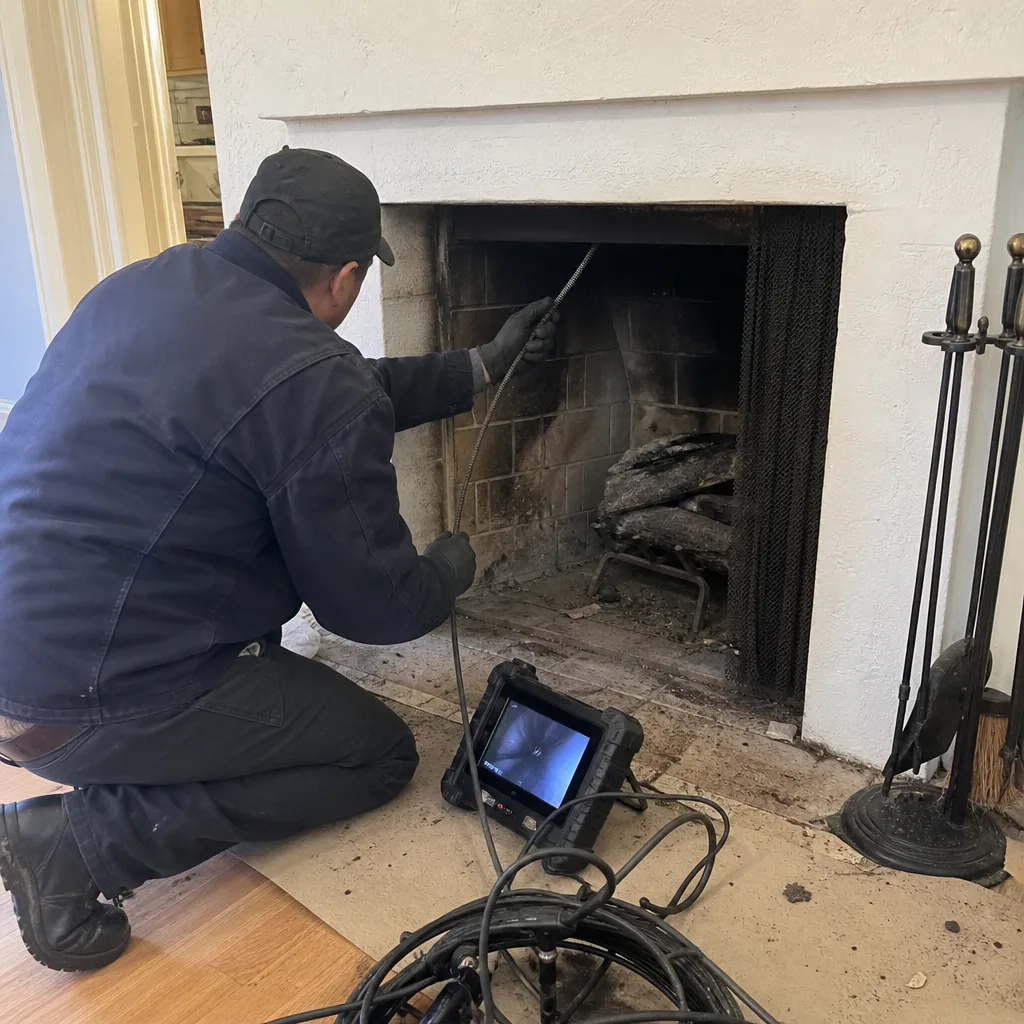
Oakland adopts the California Fire Code by reference, then adds local amendments. The most significant for chimney owners is the Wildfire Risk Overlay, which covers the Oakland hills from Piedmont Pines through Montclair, Oakmore, and the Upper Rockridge ridges. If your property sits in Fire Hazard Severity Zone 3 - check the Level Two Chimney Oakland home page for the Alameda County lookup tool - your chimney inspection requirements tighten considerably.
The hills overlay adds three requirements that flatland homeowners don’t face:
- Spark arrestor mandate: Any chimney serving a wood-burning appliance must have a listed spark arrestor with mesh no larger than 1/2 inch. This is enforced during the annual wildfire preparedness inspections conducted by Oakland Fire Department’s vegetation management crews, not during routine building inspections.
- Clearance verification: Chimney height above rooflines and proximity to overhanging branches are checked against stricter standards than the base California Fire Code. A chimney that passed inspection in 2019 may fail under 2024 overlay standards if nearby vegetation has grown.
- Documentation for insurance renewals: Several insurers writing policies in the Oakland hills now require proof of chimney inspection within 24 months of renewal. The documentation must identify the inspector, date, and condition of the flue liner and crown. A NFPA 211 Level 2 report with photo record satisfies this; a handwritten receipt does not.
The climate factor here is real and specific to Oakland. The marine layer keeps coastal flats damp through October, but the hills dry out faster and stay dry longer. We’ve pulled Class III creosote from chimneys in Glenview in September that were clean in April. The temperature inversion layer that traps smoke in the basin below 800 feet elevation also affects draft patterns. A chimney that drafts adequately in Temescal may spill smoke into the room on a still evening in the hills. These aren’t abstract concerns; they’re why we adjust our inspection protocol based on elevation and exposure.
Oakland Fire Department does not charge for wildfire overlay inspections, but they also do not inspect internal flue condition. That’s your responsibility. And if they flag your chimney for a vegetation clearance violation, you’ll need documentation of the mechanical system’s safety before they’ll clear the abatement.
Which Chimney Repairs Require a City of Oakland Building Permit
This is where homeowners lose money in both directions: paying permit fees for work that doesn’t require them, or skipping permits for work that does and inheriting a title defect.
Here’s the actual breakdown for Oakland, confirmed with the City of Oakland Building Services Division in 2024:
| Work Type | Permit Required? | Notes |
|---|---|---|
| Chimney cleaning / sweeping | No | Maintenance activity; no structural change |
| Firebox cleaning and minor refractory repair | No | Under $500 in materials and labor |
| Chimney cap replacement (like-for-like) | No | Same dimensions, no structural modification |
| Chimney cap replacement (oversized or custom) | Yes | Changes lateral load or wind exposure |
| Crown repair (patching under 25% area) | No | Cosmetic maintenance |
| Crown rebuild or replacement | Yes | Structural element; requires engineering review if over 4 feet above roofline |
| Flue liner replacement (any material) | Yes | Always; changes fire rating and occupancy safety |
| Smoke chamber parging | Yes | Modifies fire-rated assembly |
| Chimney rebuild (partial or full) | Yes | Requires structural engineering and seismic review |
| Gas insert installation | Yes | Mechanical and plumbing permits both required |
| Exterior waterproofing / flashing repair | No | Maintenance; unless structural members are replaced |
The permit cost in Oakland runs roughly $200-$400 for liner replacement, plus plan review fees if engineering drawings are required. A full rebuild permit can exceed $1,200 when seismic bracing details are included. These are city fees only; contractor markup for permit handling varies.
Here’s the critical distinction most sweep companies won’t explain: the C-61/D-49 (sweep specialty) or C-29 (masonry) contractor license allows a company to clean chimneys and perform minor repairs. It does not authorize structural work, and it does not allow that contractor to pull a building permit for liner replacement or rebuild. For that, you need a B (general building) or C-29 contractor with specific structural qualifications, or the work must be performed under an engineer’s supervision.
We’ve reviewed competitor estimates in Oakland where a sweep company quoted liner replacement at $3,800 “including permit.” When we checked, the company held only a C-61 license. They were either pulling the permit illegally under another contractor’s license, or they weren’t pulling it at all. Either way, the homeowner’s documentation was worthless. We provide a Free Second Opinion on any written estimate specifically to catch this. Bring us the quote; we’ll tell you if the permit pathway is legitimate.
Our practice: we clean and inspect under our C-61. If we find liner damage requiring replacement, we quote the cleaning separately from the repair, and we refer the repair to a B-licensed partner or the customer’s chosen contractor. We do not markup the permit or pretend to authority we don’t hold. Clause 1 of the Haven Standard - written price, written scope, written warranty - applies to what we actually do, not what we wish we could bill for.
NFPA 211 Level 2 Documentation and Insurance Compliance
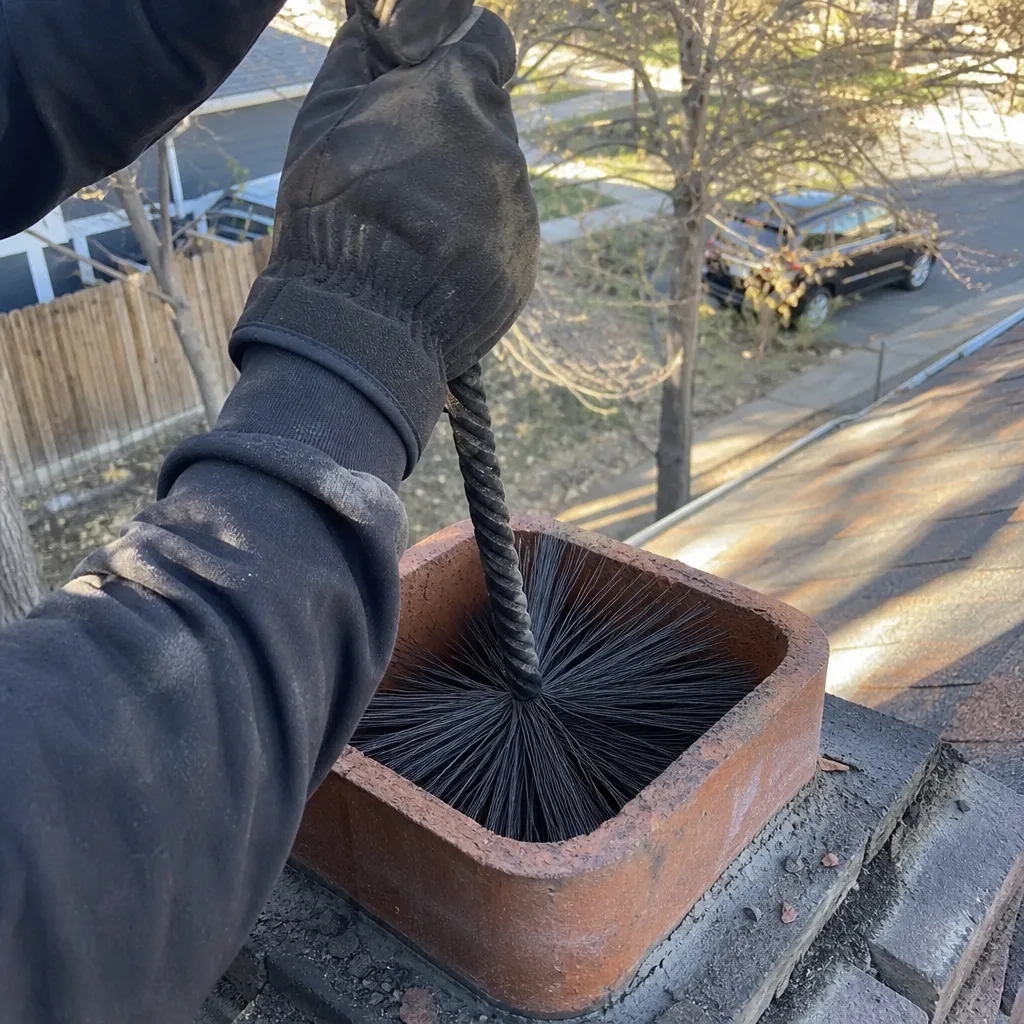
Insurance companies don’t ask for permits. They ask for documentation of condition. A permit proves the work met code at installation; it does not prove the chimney is safe today. That’s why NFPA 211 Level 2 inspection documentation often carries more weight with insurers than a decade-old permit card.
The Level 2 standard requires:
- Visual inspection of accessible portions of the chimney exterior and interior
- Video scan of the flue interior from top to bottom, with the camera traversing every flue passageway
- Inspection of accessible portions of the appliance and chimney connection
- Written report of findings, including clearances, combustible exposure, and liner condition
We’ve performed Level 2 inspections in Oakland since 2009. Every one includes a documented photo record - that’s Haven Standard Clause 4, established before any regulator required it. The archive runs continuously. If a customer needs to prove inspection history to an insurer, we can produce dated imagery from any visit.
What this documentation actually does for insurance compliance:
- Claim defense: After a chimney fire, the insurer’s adjuster will request maintenance records. A Level 2 report with photo record demonstrates due diligence under Health & Safety Code 19871.
- Policy renewal in high-risk zones: Some insurers writing in the Oakland hills now explicitly require “professional chimney inspection within 24 months” for renewal. A sweep receipt doesn’t qualify; a Level 2 report does.
- Liability transfer in sale: When a home changes hands, the seller’s disclosure of chimney condition is only as strong as the documentation behind it. A verbal “it was fine” fails in court; a dated video scan doesn’t.
The materials matter too. When we specify liner replacement, we document the proposed product: DuraFlex for flexible relining in offset flues, HeatShield for cerfractory resurfacing of sound clay liners with minor degradation, Gelco for stainless cap and shroud assemblies. These aren’t random choices; they’re matched to the specific defect and the Oakland climate. Salt air from the bay accelerates corrosion on lower-grade metals, so we specify 316Ti stainless or better for caps on west-facing exposures below 500 feet elevation.
One final point on insurance: a permit voids nothing by itself. An unpermitted liner replacement, if properly installed and documented, may still satisfy an insurer’s safety requirement. The problem is title insurance and resale. Unpermitted structural work is a material defect that must be disclosed under California Civil Code 1102. If the buyer’s lender discovers the gap, they may require permit remediation before funding. The original homeowner pays, or the deal dies.
Real Estate Transactions: When Level 2 Becomes Mandatory
California law does not explicitly require a chimney inspection at closing. But the combined effect of disclosure law, insurer requirements, and lender due diligence makes Level 2 inspection functionally mandatory in most Oakland transactions.
Here’s how it plays out:
- Transfer Disclosure Statement (TDS): Civil Code 1102 requires sellers to disclose known defects in “heating equipment and chimneys.” Most sellers know nothing about their chimney’s internal condition. A Level 2 inspection shifts the disclosure from “unknown” to “documented safe” or “documented defect with repair estimate.”
- Natural Hazard Disclosure (NHD): If the property sits in Fire Hazard Severity Zone 3 - most of the Oakland hills - the NHD report flags wildfire risk. Buyers’ insurers then request chimney inspection documentation before binding coverage.
- Lender requirements: Conventional loans rarely specify chimney inspection. But in the Oakland market, many buyers use portfolio lenders or jumbo products with stricter property condition requirements. We’ve seen lenders request Level 2 documentation for homes above $1.2 million in Piedmont Pines, Oakmore, and Montclair.
- Buyer’s remedy period: Even when not required, smart buyer agents in Oakland’s competitive market use the inspection contingency to demand Level 2 documentation. The seller pays or the buyer walks.
Who pays? In Oakland’s seller-favorable market through 2021-2023, buyers often absorbed the cost. As inventory loosens in 2024-2025, we’re seeing more sellers pre-inspect to avoid negotiation leverage. A pre-listing Level 2 inspection with clean documentation becomes a marketing asset. We’ve provided these for listing agents in Crocker Highlands and Redwood Heights; the photo record goes into the disclosure packet.
The real estate trigger most competitors ignore: estate sales and trust transfers. When a property passes through probate or trust administration, the fiduciary has heightened disclosure duties. A Level 2 inspection protects the executor from personal liability for undisclosed defects. We’ve performed these for trust attorneys in Oakland who’ve never seen the property; they need documentation to file with the court.
Cost of Permits vs. Unnecessary Permits: What Oakland Homeowners Pay
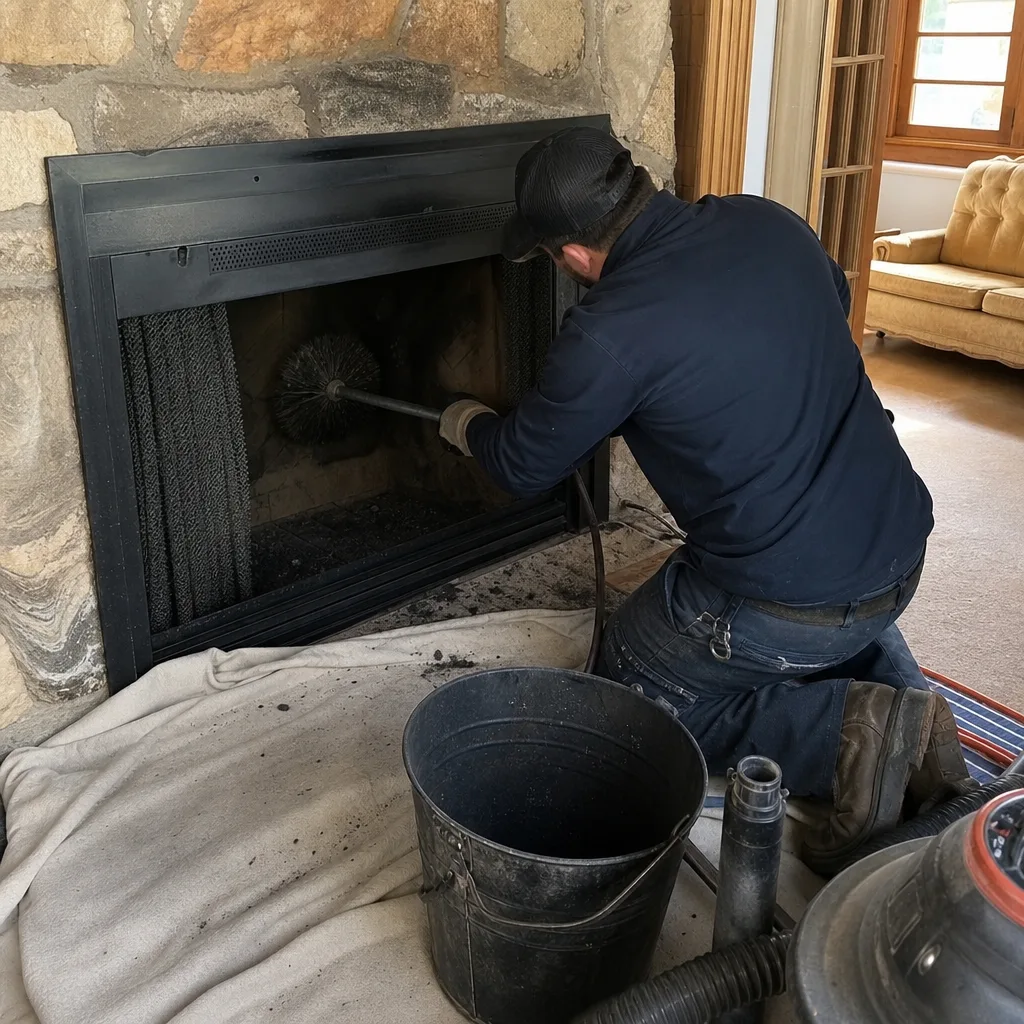
Permit costs in Oakland follow a schedule, but the real expense is often contractor markup for permit handling - or the cost of discovering unpermitted work too late.
City of Oakland Building Services fees (2024):
- Chimney liner replacement permit: $285-$380 depending on number of flues
- Crown rebuild permit: $340-$465 with engineering review
- Partial chimney rebuild: $520-$890
- Full chimney rebuild with seismic: $1,100-$1,850
- Plan review surcharge for expedited processing: +$180
These are city fees only. Legitimate contractor markup for permit handling - pulling, scheduling inspection, corrections - typically runs $150-$300. We’ve seen competitors charge $800 “permit fees” on a liner replacement where the actual city fee was $320. That’s not permit handling; it’s profit padding.
Unnecessary permits cost money too. We regularly encounter homeowners in the Oakland flats who’ve been sold “permitted crown repair” for $2,400 when the work was cosmetic patching under the $500 threshold. The contractor pulled a permit to seem legitimate, passed the cost to the customer, and performed work that needed no regulatory oversight.
Our pricing model: we quote cleaning and inspection as a flat rate, with the Level 2 documentation included (see our Chimney Cleaning & Sweep Maintenance Checklist for Oakland Homeowners for what’s covered). If repair is needed, we specify whether a permit is required, what the city fee will be, and whether we’re qualified to perform the work or you need a B-licensed contractor. No bundled mystery fees. Clause 1 of the Haven Standard - written price before any work starts - means you see the permit line item separately if it exists, or know explicitly that none is needed.
For Oakland homeowners in older stock - the 1920s bungalows in Maxwell Park, the 1940s tract homes in Elmhurst - permit history research is worth the effort. The City of Oakland maintains building records back to 1923, though microfilm gaps exist for 1970-1985. A $35 records request can reveal whether your chimney was ever rebuilt, lined, or modified with permit. If not, and if the work was structural, that’s a title defect to address before sale.
Common Mistakes to Avoid
- Assuming your sweep company pulls permits for repair work. Most hold only a C-61 or C-29 license, which does not authorize structural permits. Ask for their license classification before agreeing to liner replacement.
- Paying for a “permit fee” without seeing the city receipt. Legitimate contractors show you the permit application and the city fee schedule. If the number is round - $500, $1,000 - it’s likely inflated.
- Skipping Level 2 inspection because you “just had it swept.” Cleaning and inspection are different services. A sweep removes creosote; a Level 2 inspection documents liner condition, clearance, and combustible exposure. One does not substitute for the other.
- Disclosing chimney condition as “unknown” in a sale. California courts have found that “unknown” is not a safe harbor if inspection was reasonably available. A pre-sale Level 2 protects you.
- Ignoring the hills overlay if you’re below 800 feet. Even flatland homes can be in Zone 3 if near ridge lines. Check the Alameda County FHSZ map; don’t assume.
- Hiring based on “annual sweep” discounts without verifying documentation. The cheap sweep with no photo record leaves you with no defense if an insurer denies a claim. We’ve reviewed $89 sweeps that missed cracked liners visible on camera.
- Waiting for the fire department to inspect. Oakland Fire’s vegetation inspections check spark arrestors and clearances, not flue condition. Internal safety is your responsibility, not theirs.
When to Call a Professional
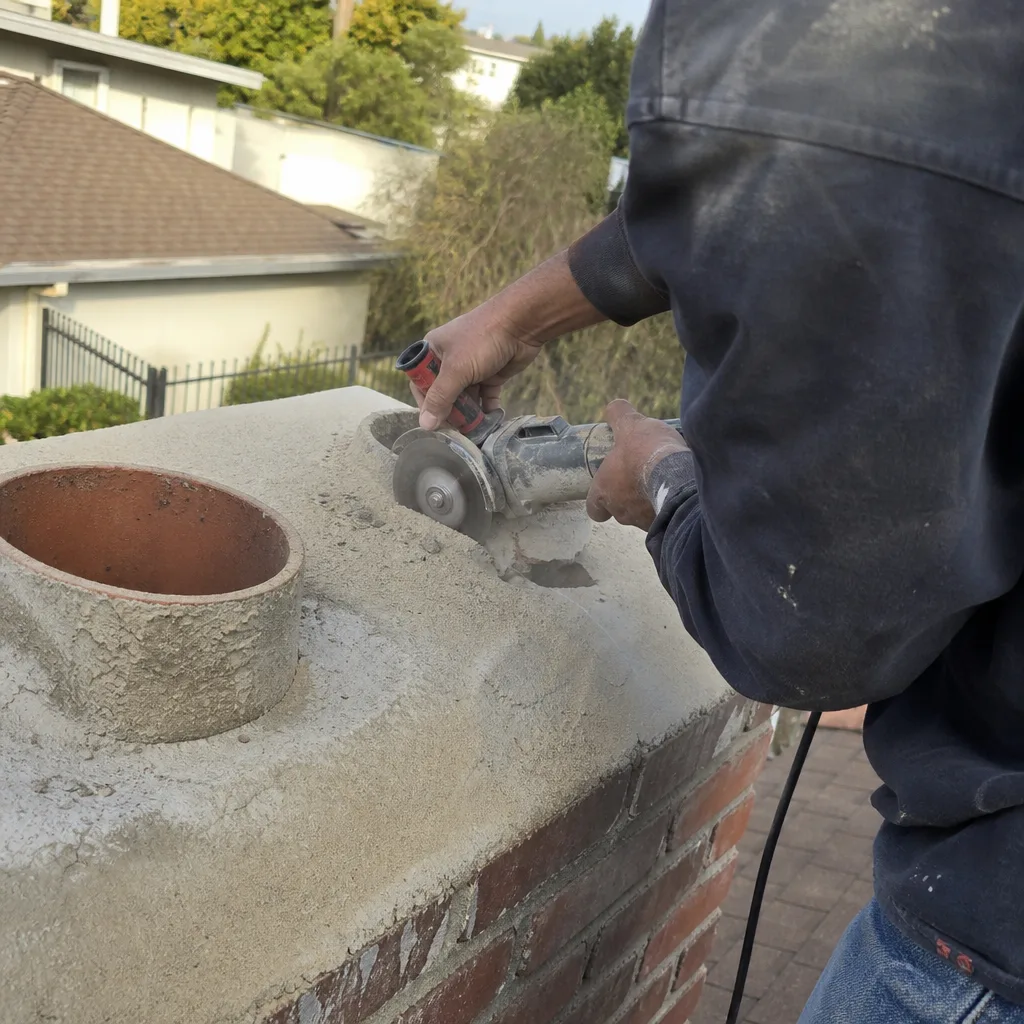
Call a qualified chimney professional when you smell smoke in the room during operation, see white efflorescence staining on exterior brick, notice rust flakes in the firebox, or find debris - bird nests, leaves, masonry fragments - falling into the hearth. These are not cosmetic issues; they indicate draft failure, moisture intrusion, or structural degradation that inspection must confirm.
Call before you list a home for sale, before your insurer renews a policy in the hills, and before you agree to any repair estimate that includes a “permit fee” you haven’t verified. Documentation is cheaper than litigation.
Chimney Cleaning & Sweep in Oakland from Level Two Chimney Oakland includes NFPA 211 Level 2 inspection and photo documentation on every visit. We offer free estimates in Oakland - call (628) 300-1701. If you have a written estimate from another company, our Free Second Opinion will verify whether the permit pathway, scope, and pricing are legitimate.
Frequently Asked Questions
No. Chimney cleaning and sweeping are maintenance activities that do not alter structure, fire rating, or occupancy safety. No California jurisdiction requires a permit for cleaning. If a company tells you otherwise, they’re either mistaken or adding unnecessary fees.
Professional chimney sweeping in Oakland typically runs $180-$320 for a standard fireplace flue, with Level 2 inspection and photo documentation adding $120-$200. Multi-flue systems, insert removals, or significant creosote accumulation increase the range. We quote flat rates in writing before scheduling - call (628) 300-1701 for exact pricing on your system.
For wood-burning systems in Oakland, inspection annually and cleaning as needed. Hills homes burning more than three times weekly may need annual sweeping; flatland homes with occasional use often extend to two years. Gas systems need inspection every two to three years for vent integrity, though cleaning is rarely required. The specific factor is creosote class, not calendar time.
Accumulated creosote ignites at approximately 451°F - a normal operating temperature for wood fires. A chimney fire can reach 2,000°F, cracking clay liners and exposing framing to direct flame contact. Carbon monoxide, produced by incomplete combustion, can leak through cracked liners into living space without visible smoke. In Oakland’s older housing stock, these risks compound with aged, unlined chimneys common in pre-1940 construction.
You need documentation, not a sales pitch. A legitimate liner recommendation comes with video evidence of the defect: cracks, gaps, missing mortar joints, or spalling tile visible on camera. At Level Two Chimney Oakland, nothing is recommended without photo evidence you can see yourself, and we specify when work can safely wait. Bring us any competitor’s written estimate; our Free Second Opinion verifies the finding.
A sweep removes combustible deposits from the flue. A Level 2 inspection is a documented evaluation of the entire system - flue liner, smoke chamber, firebox, clearances, and exterior - using video scanning equipment. Cleaning does not require documentation; Level 2 produces the photo record that satisfies insurance, real estate disclosure, and the Haven Standard Clause 4 archive. We perform both together, but they’re separate services with separate deliverables.
Yes, if the work was structural and the buyer’s lender or title company discovers the gap. California Civil Code 1102 requires disclosure of “material defects,” and unpermitted structural work qualifies. The buyer may demand permit remediation, escrow a repair fund, or walk. A pre-sale permit history search - $35 from Oakland Building Services - reveals what’s on record before you list.
The Bottom Line
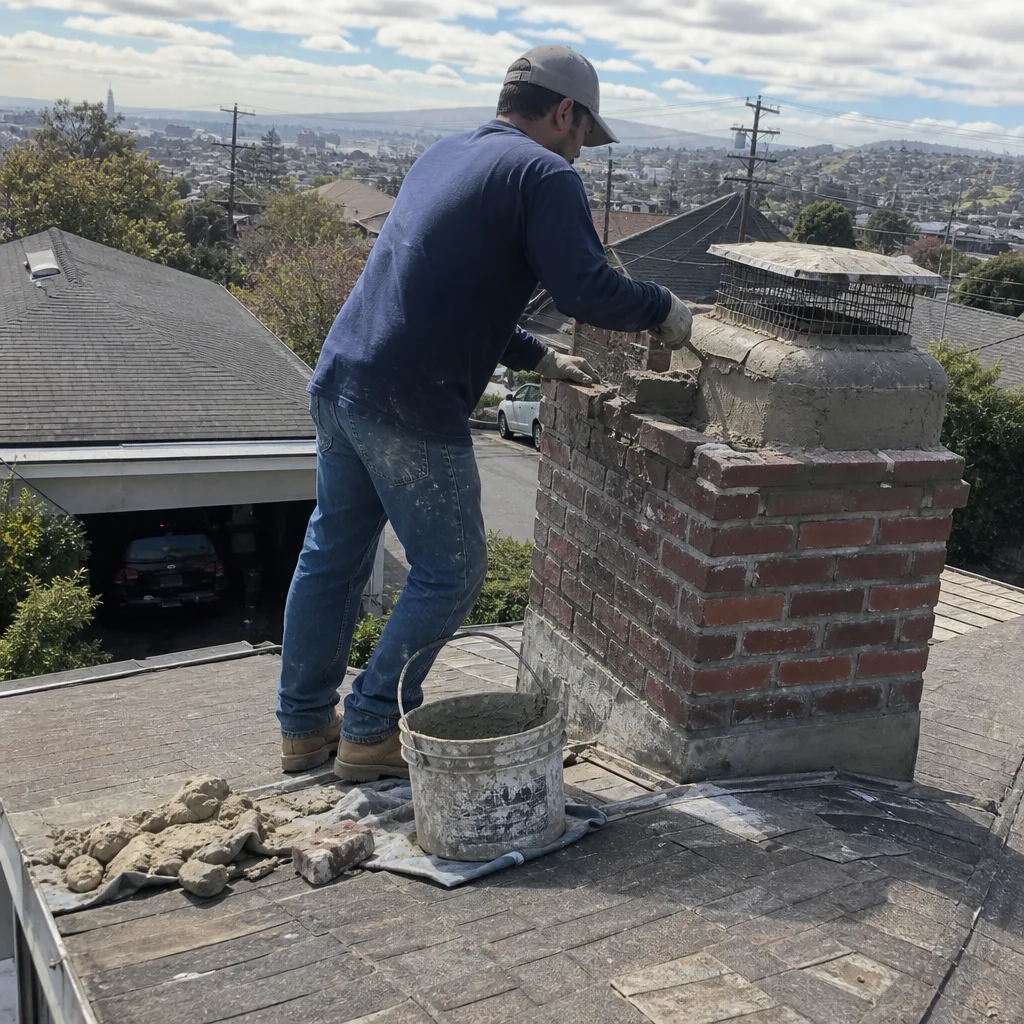
Chimney cleaning itself is unregulated in California, and that’s fine - it’s maintenance, not construction. The repairs that cleaning reveals are where regulation lives, and Oakland’s hills overlay adds local complexity that flatland guides miss. The homeowner who understands this distinction saves money on unnecessary permits, avoids title defects from missing ones, and builds the documentation trail that insurers and buyers actually want. The tool that bridges both worlds is NFPA 211 Level 2 inspection with photo record: it satisfies compliance needs when no permit exists, and it identifies when a permit is required before work proceeds. We’ve documented 38,000+ chimney systems this way since 2009. The archive speaks louder than any sales claim. For more guides & resources, visit our blog.
Written by Corrine Halstead, Owner at Level Two Chimney Oakland, serving Oakland since 2009.